


Nukus/ Amsterdam – Médecins Sans Frontières (MSF), the Ministry of Health of Uzbekistan (MoH) and the Ministry of Health of Karakalpakstan today marked the successful conclusion of their long-running collaboration on the Karakalpakstan Tuberculosis Programme. The closing ceremony, attended by MSF staff, national health authorities and representatives from the expert community, celebrated almost three decades of joint efforts to strengthen tuberculosis (TB) diagnosis, treatment, and care in Karakalpakstan.
“Through this work, we have shown that early diagnosis and timely treatment dramatically improve patient outcomes and reduce transmission,” says Norman Sitali, MSF medical operations manager responsible for programmes in Uzbekistan. “In addition to direct care, MSF has helped strengthen the broader health system—training healthcare workers, improving clinical practices, and integrating services into national structures.”
“While MSF is completing its part, the Ministry of Health is taking over the national ownership and will continue the fight against TB in Uzbekistan,” says Sitali.
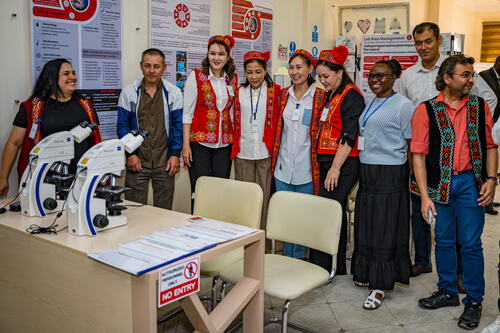
Launched in 1998 in response to high TB rates in Karakalpakstan, the Nukus TB Project began with the implementation of the World Health Organization’s Directly Observed Treatment, Short Course (DOTS) framework. Over time, it evolved into a comprehensive, person-centred approach addressing both drug-sensitive and drug-resistant forms of TB. The programme significantly expanded access to care and brought renewed hope to thousands of patients and their families.
“The project that focused on identifying, treating, and supporting patients with tuberculosis, played a crucial role in reducing the disease burden in the region,” says Irina Liverko, deputy director of the Republican Specialised Scientific and Practical Medical Centre of Phthisiology and Pulmonology.
“It introduced innovative methods, adopted personalised treatment approaches, and accumulated valuable expertise in combating tuberculosis,” she says.
A cornerstone of the project has been sustained capacity building for healthcare professionals and Ministry of Health staff. Through years of training, mentorship, and technical support, the Ministry of Health is now better equipped to lead the regional TB response independently.
I have been on treatment for tuberculosis for six months now and feel much better. I can go outside and enjoy life.Zukhra, tuberculosis patient
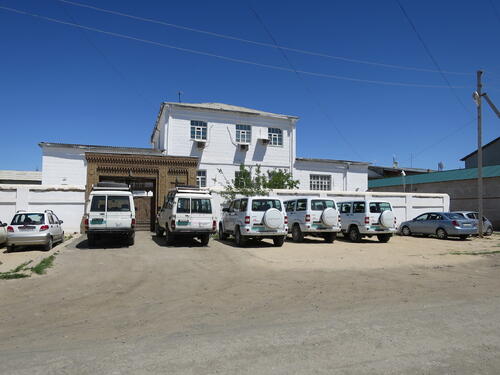
1998
MSF begins our work in Karakalpakstan
In response to high TB rates in Karakalpakstan, MSF begins our work in Karakalpakstan in partnership with the Ministra of Health of Uzbekistan and of Karakalpakstan. MSF introduces the World Health Organization’s recommended Directly Observed Therapy, Short-course (DOTS) strategy for TB control with an assured drug supply and standardised regimens that offered the opportunity to quell the high incidence of TB. MSF, in close cooperation with the Ministry of Health, works to expand this treatment programme first initiated in Muynak throughout the whole of Karakalpakstan.
2002
MSF and the Ministry of Health monitor drug-resistant TB patterns
MSF and the Ministry of Health begin analysing local patterns of drug resistance, which identifies 15 per cent as drug-resistant TB (DR-TB) among new cases and 40 per cent among retreatment cases.
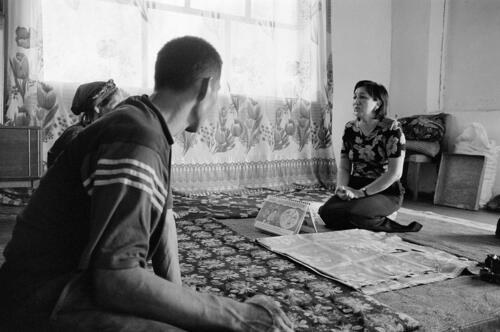
2003
DOTS-plus pilot project increases treatment capacity
DOTS-plus pilot project is commenced in Nukus City and Chimbay rayon within Karakalpakstan. To meet the needs of patients with multidrug-resistant TB (MDR-TB), MSF renovates the Republican TB Hospital #2 in Nukus, a 75-bed healthcare facility.
MSF pioneers a major innovation - the introduction and piloting of outpatient care, which evolves into a fully integrated outpatient treatment model. This shift significantly increases the number of patients who could be treated by removing the limitations imposed by hospital bed capacity.
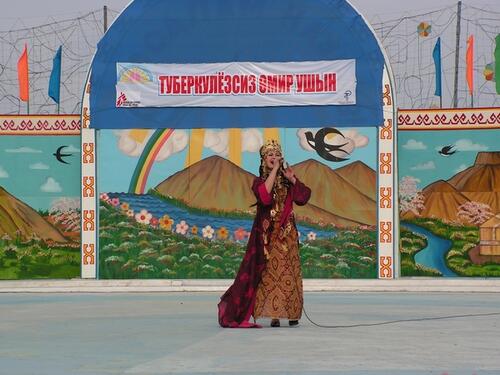
2009
"Comprehensive TB care for all" piloted across Karakalpakstan
MSF and the Ministry of Health pilot the "Comprehensive TB care for all" model. The model provides comprehensive TB care, including rapid diagnosis and integrated DOTS and DOTS-plus treatment, for patients in all districts in Karakalpakstan. MSF provides all drugs, medical and lab materials, as well as highly nutritious food for the patients.
MSF also provided psychosocial, psychological, and adherence support to patients and their families, helping them manage treatment side effects and the social impact of the disease. The project expands to all districts of Karakalpakstan, implementing a comprehensive, person-centred model of care.
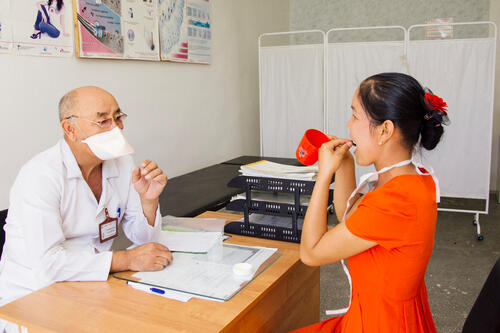
2014
MSF pilots ambulatory day-one TB treatment
MSF pilots ambulatory day one treatment research in Karakalpakstan, later the National TB Programme in Uzbekistan adopts it.
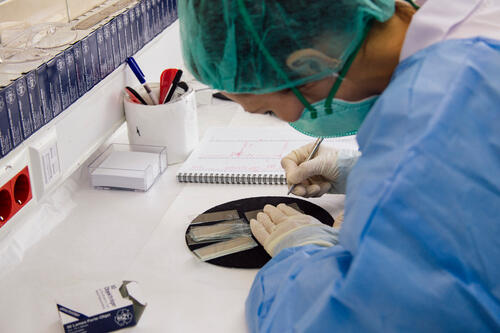
2016
MSF and the Ministry of Health enhance TB diagnostic capacity
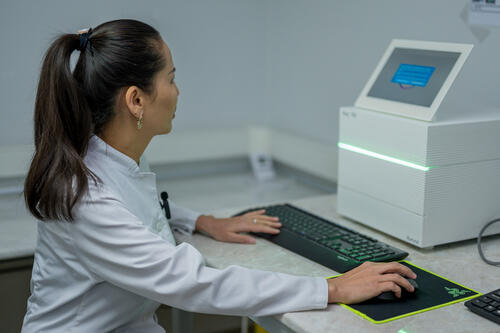
To enhance diagnostic capacity, MSF established a state-of-the-art mycobacteriology lab in Nukus—one of the most advanced facilities of its kind in Central Asia—offering comprehensive TB and MDR-TB testing alongside high-quality clinical laboratory services. This lab, developed in collaboration with the Ministry of Health and MSF, is equipped with tools like GeneXpert and targeted Next-Generation Sequencing (tNGS) for rapid, precise TB diagnostics.
2017
TB-PRACTECAL Trial in Nukus helps shape WHO’s 2022 MDR-TB guidelines
As part of our commitment to advancing best practices in TB care, MSF supports the national rollout of the WHO’s 2016 TB treatment guidelines, including the shorter-course regimen.
Nukus becomes one of the sites for the TB-PRACTECAL clinical trial, a multi-site phase II/III study sponsored by MSF to test a shorter, all-oral treatment regimen for MDR-TB. The trial demonstrated that the new regimen was faster (six months), more effective, and had fewer side effects than the global standard. These groundbreaking results influenced the World Health Organization’s 2022 guidelines, in which the new regimen is adopted as a priority recommendation.
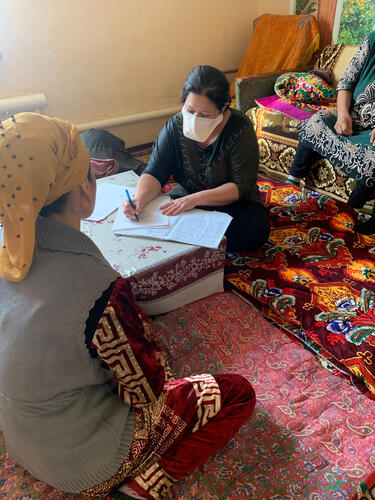
2019
Expanding access to new TB treatments
MSF assists the Ministry of Health in rolling out the 2019 WHO guidelines across all 16 rayons of Karakalpakstan, ensuring access to newer, more effective TB treatment regimens.
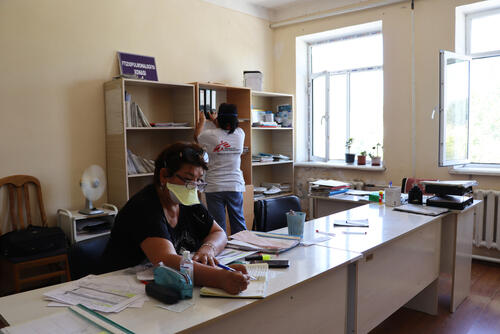
2022
SMARRTT TB project launched in Uzbekistan
MSF and the Ministry of Health launch SMARRTT (Six-Month All-Oral Regimens for Rifampicin-Resistant Tuberculosis), an operational research project building on TB-PRACTECAL to bring the benefits of scientific innovation to more patients in Uzbekistan.
2023
Scaling up community-based TB care across Uzbekistan
Plans begin for nationwide rollout of the new treatment regimen in Uzbekistan, with MSF and local health authorities working together to scale up access, build capacity, and strengthen community-based TB care.
The project also integrated adherence support and psychosocial counselling to help ease the psychological burden that TB patients face.
“I have been on treatment for tuberculosis for six months now and feel much better. I can go outside and enjoy life,” says Zukhra. “Volunteers and counsellors played a special role in my recovery, providing me with tremendous help, especially psychological support.”
“Before, I didn't even dream about the future — it seemed like my life was over. But thanks to their attention and care, regular visits and check-ups, I began to believe in a better future,” she says. “Now I feel good, I continue to take my medication and look forward with hope.
One of the project's key achievements is the establishment of a state-of-the-art mycobacteriology laboratory in Nukus—now one of the most advanced facilities of its kind in Central Asia. This lab plays a critical role in diagnosing both TB and multidrug-resistant TB (MDR-TB), providing high-quality testing services across Karakalpakstan.
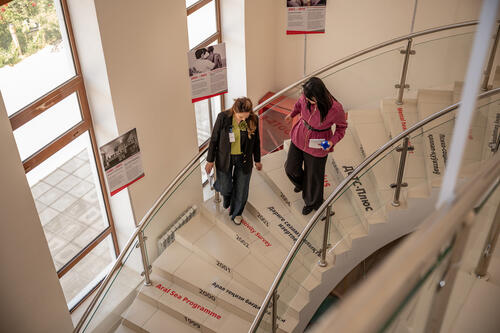
Historically, patients with drug-resistant TB faced grueling 18- to 24-month treatment regimens, often accompanied by severe side effects. To address this, MSF launched the TB-PRACTECAL clinical trial in 2016, with Nukus serving as one of the study sites. The trial tested a new, fully oral, six-month treatment that proved more effective and significantly better tolerated than the previous global standard.
The trial’s results were instrumental in shaping the World Health Organization’s 2022 treatment guidelines, which prioritised the new regimen for drug-resistant TB. Building on this progress, MSF and the Ministry of Health conducted operational research to support broader implementation and the nationwide rollout of the shorter regimen in Uzbekistan.
As MSF concludes our operations in Nukus, the Ministry of Health reaffirms its commitment to sustaining and further strengthening TB care across Uzbekistan. The partnership has established a solid foundation for continued progress in the fight against TB — ensuring that patients nationwide can access timely, effective, and compassionate treatment.
Médecins Sans Frontières (MSF) has been working in the Republic of Uzbekistan since 1998, in close collaboration with the country’s Ministry of Health. Over the years, MSF has played a key role in strengthening the national response to infectious diseases, including tuberculosis (TB), HIV, and hepatitis C. Through the introduction of innovative treatment protocols and person-centred care models, MSF has helped to significantly improve health outcomes across the country.
Lebanon
Lebanon: Humanitarian scale-up urgently needed after almost two months of devastation
Statement
17 Apr 2026
Gaza-Israel war
Addressing frequently asked questions and allegations about MSF’s work in Gaza
Project Update
17 Apr 2026