


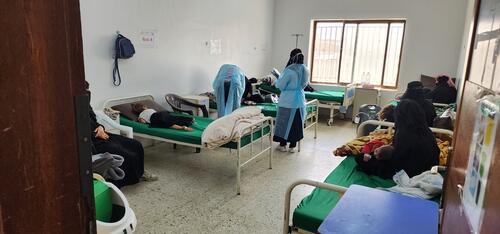
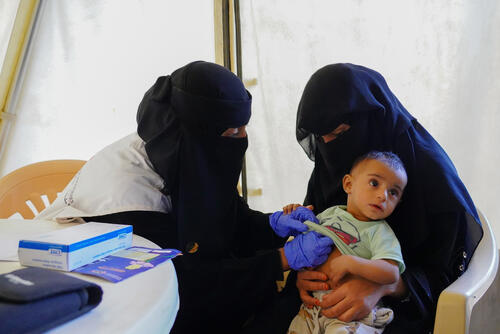
One-year-old Amira is recovering from measles in the isolation ward run by Médecins Sans Frontières (MSF) at Al-Wahda hospital in Ma'bar city, Dhamar governorate in Yemen.
“She is my only daughter among three children,” says Amira’s father. “We live two hours away from the nearest hospital. People in our village told us that there is a centre for treating measles at Al-Wahda hospital, so I brought her here. When we arrived, she looked lifeless. I thought she would die at any moment.”
Like Amira’s father, many people in Yemen live in great anxiety when their children catch measles, and they watch their health deteriorate, struggling to access healthcare. In the heart of the country, Dhamar governorate has seen a severe outbreak of measles in recent months. After more than a decade of ongoing conflicts that have exhausted the country and significantly limited access to healthcare, people have become more vulnerable to preventable diseases. Families watch their children suffer from high fevers, rashes, and complications that could have been avoided with timely medical intervention.
“At first, I thought it was too late to save her and perhaps it was better to just let her rest at home till her last moment,” says Amira's father. “But when I eventually came here, the healthcare workers at the isolation centre reassured me. They explained her condition and promised to do everything they could.
“They convinced me to leave her in the isolation unit,” he says. “Now she has a new life – something I never expected after all she went through. I am forever grateful to the team that brought her back to life.”
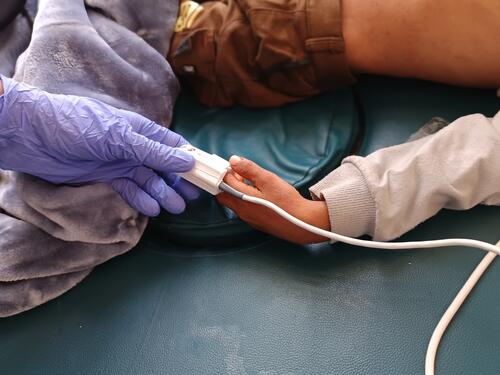
Measles is a highly contagious viral disease that can easily spread in crowded places, and can lead to serious health complications, especially in children under five. It is particularly dangerous for those who already have other health conditions. Although it is a potentially deadly disease, it can be prevented through vaccines, which are the most effective tool to control its spread. Vaccination not only protects the individual but also helps achieve community immunity, which is crucial in preventing disease outbreaks.
MSF has been providing much-needed medical care to children who have contracted measles in Dhamar, since early April 2025.
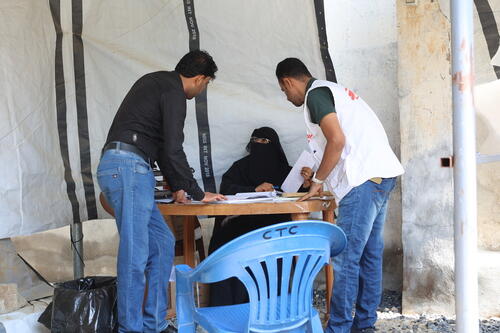
One of the key components of MSF’s response is our mobile emergency team, which has a unique ability to respond quickly and directly to communities’ urgent medical needs. The team can quickly mobilise resources, set up temporary clinics, and provide immediate care. This rapid response capability is crucial in controlling the spread of infectious diseases, like measles.
The team is currently treating patients in the isolation ward at Al-Wahda hospital, which has a capacity of 40 beds. The team also provides free medical consultations through three mobile clinics that travel across six districts in the governorate. Given the difficulties these patients face in accessing necessary healthcare, the team also provides referral and patient transportation services from the mobile clinics to the isolation ward at Al-Wahda hospital, and transfers severe cases from the isolation ward to more advanced medical centres.
With the recent decrease in humanitarian support and international funding for the healthcare system in Yemen, we feel deep concern as we witness communities’ growing medical needsDesma Maina, country director for MSF in Yemen
Between April and July 2025, the MSF team cared for more than 1,400 measles patients in Dhamar through our activities at Al-Wahda hospital and the mobile clinics, with more than 56 per cent of patients being children under five. While it is difficult to identify all the factors that increase the challenges of combating measles and other preventable diseases, significant gaps in routine vaccination and limited access to basic healthcare facilities play a major role in the large increase in the number of measles patients.
“Yemen has recently witnessed a worrying increase in measles cases,” says Desma Maina, country director for MSF in Yemen. “This comes amid escalating needs for healthcare and people facing difficulties in accessing it – more than 10 years of war and instability have led to the deterioration of health services in the country.
“With the recent decrease in humanitarian support and international funding for the healthcare system in Yemen, we feel deep concern as we witness communities’ growing medical needs,” says Maina.
The measles outbreak in Yemeni governorates, including Dhamar, is a clear reminder of the importance of vaccination and the need for rapid medical intervention in times of crisis.
Despite MSF teams’ significant efforts, the scale of needs requires more concerted efforts and a comprehensive and coordinated response from all actors in the health sector to prevent the deterioration of the current situation. Nevertheless, MSF remains committed to providing healthcare to people in need in Yemen.
Yemen
Yemen: MSF hands over activities in Marib and Taiz city to local authorities
Project Update
3 Jun 2025