


Humans in transit is an art exhibition by Médecins Sans Frontières (MSF), that shares the testimonies and portraits of 400 people who told their story of migration to us in the last decade. Some of these testimonies were collected by our teams in Libya, while others are from aboard our search and rescue vessels, which used to operate in the Mediterranean Sea.
Each of these testimonies and portraits, while anonymous, represent a person who has endured abuse along their journey searching for safety.
The illustrative portraits used in the exhibit have been created by four artists, who are refugees themselves. The written testimonies were used to inspire the portraits, giving a face to every story. The Humans in transit exhibit is a collective act of storytelling from refugees. The full exhibit is available in digital format. Below is a selection of eight of the 400 testimonies and portraits.
35-year-old man from Bangladesh, testimony taken from a search and rescue boat, 2017
Artwork by Tawab Safi
“A middleman convinced me to go to Libya for work – he said the economy was booming. He asked for 800,000 taka but we didn’t have that much, so he agreed to take 200,000 taka and the rest he would arrange.”
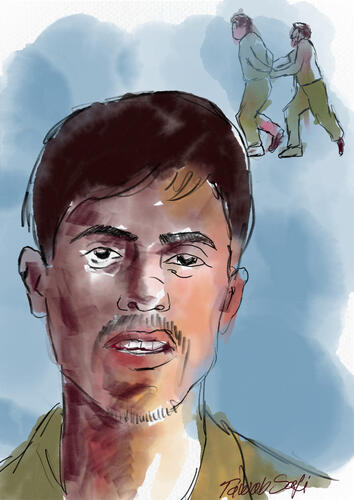
When I got to Tripoli, some Libyans drove me and 11 others to a house in a car with blacked-out windows. They made me tell my family to pay money to the middleman. I thought that now they would give me a job – but they had no job for me.
Later, I was stopped by police and beaten up – they stole my money and phone.
Finally, I met a Bangladeshi man who helped me get a boat. He handed me to some people who kept me locked in a room for two weeks with very little food or water before taking me to the boat. My mind has been affected.
17-year-old girl from Gambia, testimony taken from a search and rescue boat, 2016
Artwork by Tawab Safi
“I left home last October. My parents had died of illness and my sister in an accident. A friend paid for me and my younger brother to travel to Libya. He said it was a good place to work.”
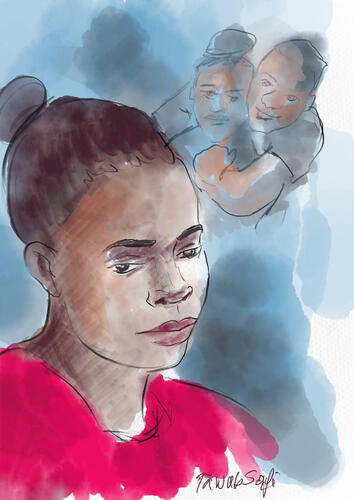
We went from Sabha to Tripoli. Once in Libya, I realised it was not safe. We would hide and go without food for fear of being kidnapped and sold to prison. In January, I lost my brother when security forces cleared out the Africans from the area where we were living.
I hid for a month at Tajura, then went back to Tripoli and got a friend to send me money for a boat to Italy. They search you and take everything – you can keep only the clothes that you are wearing.
I miss my brother. I see other people with their families but I am completely alone now.
27-year-old woman from Côte d’Ivoire, testimony taken from a search and rescue boat, 2016
Artwork by Ngadi Smart
“I wanted to provide for my little girl back home, but I was trapped and forced to work as a nanny for a Libyan family for two years. Once I tried to escape, but the police caught me and put me in prison.”
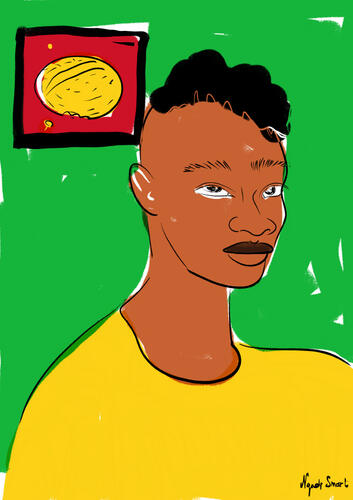
While I was there, I saw a lot of violence and I was beaten myself. After a month I was back to work as a nanny.
Finally, I escaped and walked until with God’s power I found a boat. I begged to be allowed on board. I didn’t know where the boat was going but I didn’t care as long as I got out of Libya.
45-year-old man from Syria, testimony taken from Libya, 2016
Artwork by Ngadi Smart
“I flew here with friends last July. We all had passports and residence permits. We planned to go back home at the start of next year.”
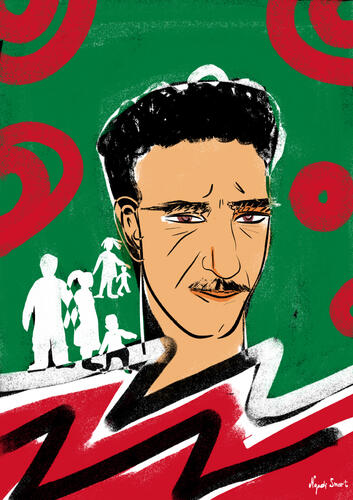
We were all working – I was working in construction. We were asleep when the militia came and arrested all 10 of us. They took all our belongings. We don’t know if they looted our apartment afterwards.
We heard stories from other Syrians that they had paid and been released, but we have never been asked to pay to be let go – I don’t know why. I could have paid them. The facilities here are dirty but okay. The main problem is the food.
I have five children at home. I spoke with them the day before I was arrested. I don’t know how they are doing now. We didn’t do anything wrong – I want to go back home and be with my family.
18-year-old man from Sudan, testimony taken from Libya, 2021
Artwork by Souad Kokash
“When the protests started in Sudan in 2019, I ran away to Libya.”
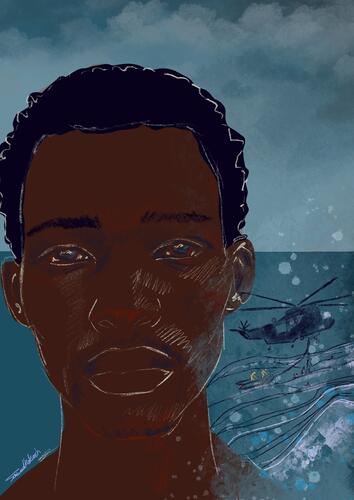
On my way to Tripoli, I was detained for three months with other Sudanese in Bani Walid. We broke a window to escape and travelled to Tripoli. The men I’d escaped with took care of me. I stayed indoors doing the housework and cooking, because they said it was too dangerous for a young man to look for work.
I paid 500 Libyan dinars to a trafficker, another Sudanese, to put me on a boat. My friends went on an earlier boat and were caught. When I sailed, the sea was very rough, and we had to be rescued by a Libyan helicopter. They handed us over to the militia, who attacked us in the bus.
What shocks me is that in this detention center, detainees act as guards. There’s even a Sudanese detainee who beats us.
25-year-old woman from Ethiopia, testimony taken from a search and rescue boat, 2017
Artwork by Souad Kokash
“In Ethiopia they tried to make my husband join the army, so we went to Sudan hoping to find work. But we couldn’t find good jobs, so after five months we decided to go to Libya. It took two weeks to cross the desert.”
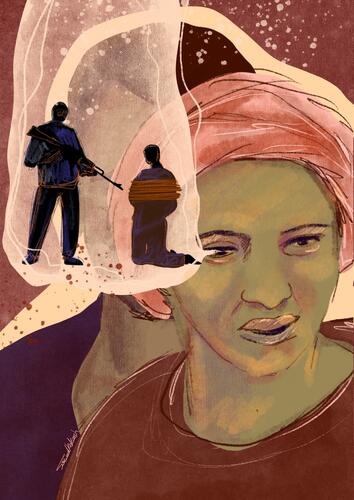
In Libya I was kidnapped for 10 days. I didn’t get beaten, but a lot of people were beaten or even shot dead if they didn’t pay. They give you six months to come up with the money – after that they kill you.
Even after I got out, living conditions in Libya were really bad. That’s why we decided to cross.
24-year-old man from Somalia, testimony taken from Libya, 2016
Artwork by Barly Tshibanda
“In Somalia, there has been war for the last 25 years. I was recognised as a refugee in Yemen. I was in Yemen, but then there was the war. Many friends died in Yemen because of the war.”
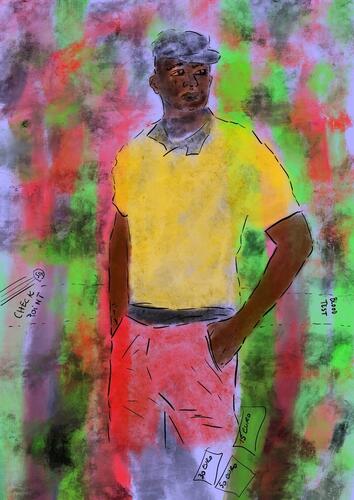
I crossed the sea from Yemen, went back to Somalia, then to Ethiopia, Sudan, and Libya.
I came through the detention centre of Beni Walid, where I spent eight months. I have been in Al Fallah for the last three months. They ask for 1,000 dinars per person to be released.
Sometimes they beat us. They smoke and after they come and hit us. They hit you on the head or in your intimate parts. I have witnessed people dying.
27-year-old woman from Nigeria, testimony taken from a search and rescue boat, 2016
Artwork by Barly Tshibanda
“I left because people in my village wanted to do FGM [female genital mutilation] to my daughter. We hid with my friend Ella in another village. For a while it was good. We both worked – me as a hairdresser and Ella in a bank.”
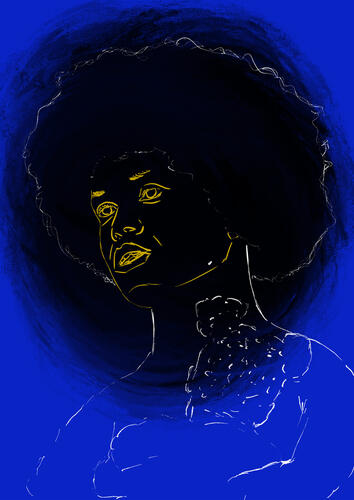
Then Ella’s uncle decided to marry her to his older friend. They locked her up until they could arrange the wedding.
One night we escaped. We heard there was work in Libya, but we ended up in a trap. We were locked in a house. They tried to force us into prostitution. When we refused, they beat us. One night they let us go. We were in a big crowd, being herded to the sea. I thought they would kill us. Instead they put us on a rubber boat. Nobody asked us if we wanted to go. We didn’t choose to come, but we cannot go back.
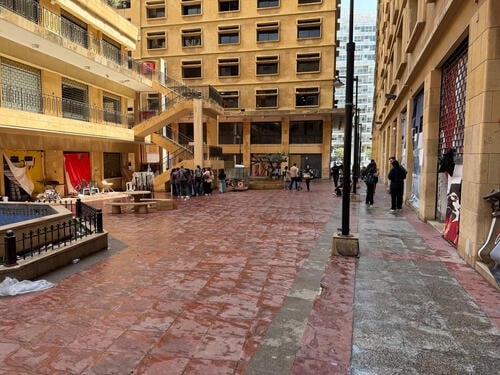
Lebanon
Lebanon: Humanitarian scale-up urgently needed after almost two months of devastation
Statement
17 Apr 2026