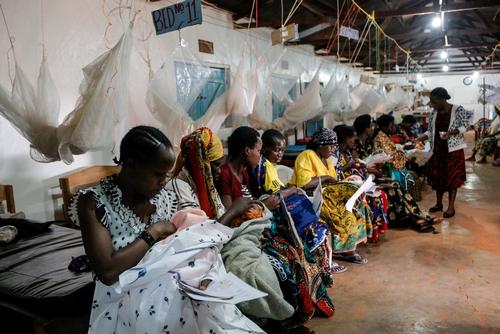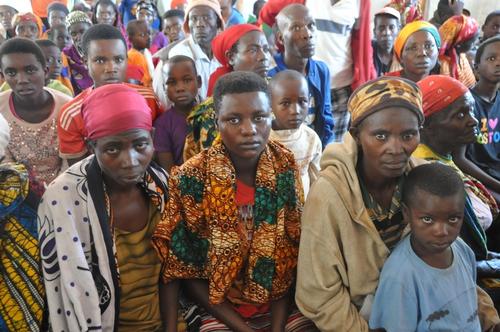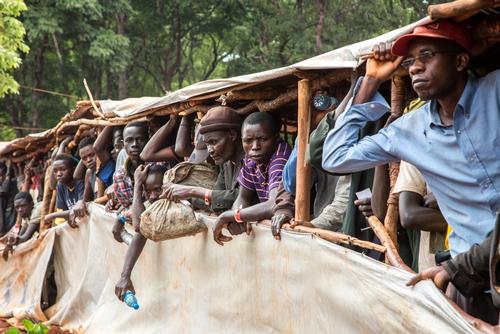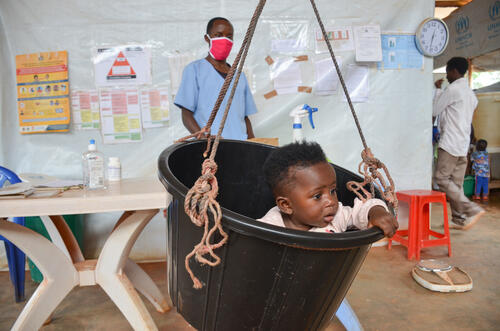
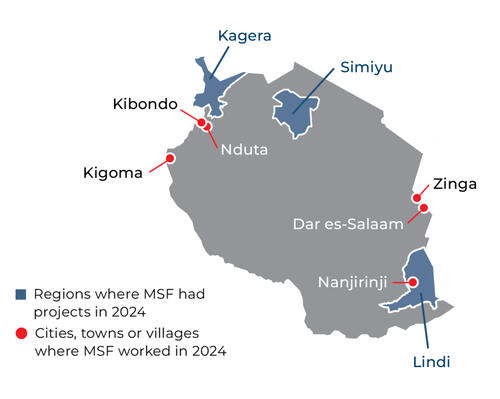
We provide assistance to Burundian refugees living in Nduta camp in the north-west of Kigoma region in Tanzania.
Currently, Tanzania hosts around 246,000 refugees and asylum seekers, mainly from neighbouring Burundi. MSF’s support has focused on specialised and secondary healthcare with the aim of improving the quality of care for refugees and Tanzanian host communities.
MSF has also responded to several emergencies in the country including floods.
In August 2022, an agreement was signed for us to begin working in Liwale district. This project aims to provide access to quality primary and secondary healthcare in seven government health facilities, focusing on children under five and pregnant women.
Our activities in 2024 in Tanzania
Data and information from the International Activity Report 2024.
431
431
€8.4 M
8.4M
1993
1993
MSF in Tanzania in 2024
Médecins Sans Frontières ran a range of projects in Tanzania in 2024, providing healthcare to Burundian refugees and host communities, responding to disease outbreaks, and improving mother and child health services.

46,900
46,9
5,770
5,77
1,790
1,79
Tanzania
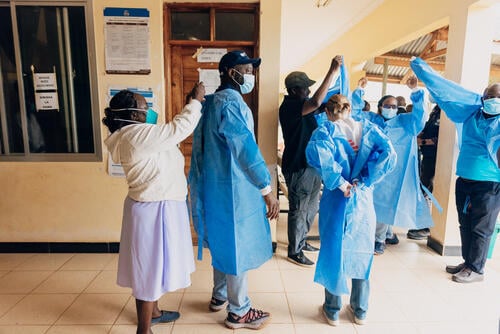
MSF team supports response to outbreak of Marburg virus in Tanzania
Press Release
3 Feb 2025
Refugees, IDPs and people on the move
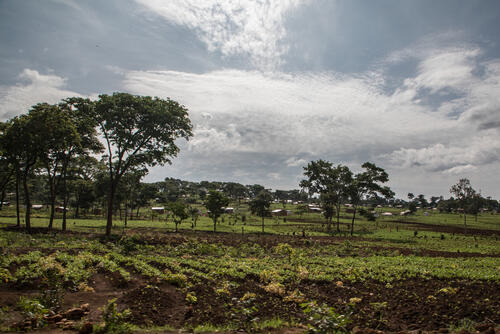
“No one chooses to be a refugee”
Voices from the Field
19 Jun 2020
Tanzania
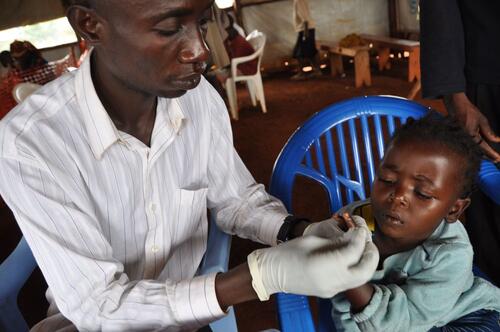
Departing Nyarugusu camp, MSF continues refugee response at nearby Nduta
Press Release
30 May 2017