


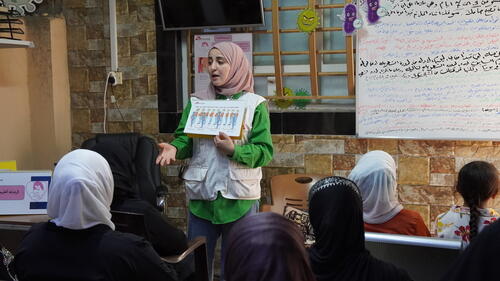
After eight years of work supporting the rehabilitation of the healthcare system in Mosul, Iraq, Médecins Sans Frontières (MSF) is concluding our project in Al-Ubor neighbourhood.
In October 2025, we handed over operation of the Al-Ubor health centre to the Iraqi Red Crescent Society. This handover marks the growth of the healthcare sector and a successful transition from emergency response to sustainable, locally led healthcare.
When Mosul emerged from years of intense conflict in 2017, its health system was on the verge of collapse. At the time, most hospitals were damaged or destroyed, there were few medical staff, and basic equipment was scarce.
It was in this fragile landscape that MSF began to work—initially to cover urgent gaps, and later to help rebuild the foundations of care. MSF’s role was to stabilise emergency services, then support local teams in regaining the skills and confidence needed to run them independently.
Repairing the health system
“We were racing against time—complex injuries, emergency surgeries, so many patients needing immediate intervention,” says Xavier Lastra, MSF project coordinator in Mosul. “When the situation slowly stabilised, our focus shifted to one question: how can the health system recover sustainably?”
Since 2017, MSF’s medical activities in Mosul moved from acute emergency response to strengthening a more resilient health system. Teams set up field hospitals, provided lifesaving surgeries and intensive care, and later expanded into specialised services such as post-operative care, complex wound management, safe maternal care, and infection prevention and control and antimicrobial resistance stewardship activities.
The goal was not only to treat patients, but to introduce a way of working that would remain long after us.Jackie Murekezi, MSF’s project medical coordinator in Mosul
Beyond direct medical care, MSF supported staff training, improved patient care pathways, and helped establish evidence-based protocols inside public hospitals. By the time we handed over several projects to the Ministry of Health, essential knowledge and practices had already become part of the daily work of local teams.
“The goal was not only to treat patients, but to introduce a way of working that would remain long after us,” says Jackie Murekezi, MSF’s project medical coordinator in Mosul.
A lasting impact on health workers
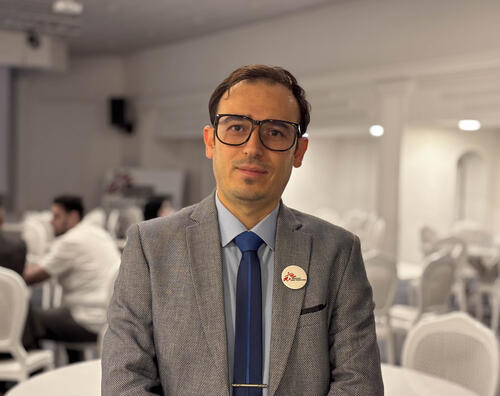
“Working with MSF changed how I understood medicine,” says Dr Ali Qasim Mohammed, who joined MSF in 2017. “It taught me to make decisions under pressure and to look at the full treatment pathway, not just one step.”
His role evolved from a narrow clinical focus to a broader one that included surgery, wound care, rational antibiotic use, infection control, and even psychosocial support. With supervision and daily practice, he later became a trainer himself and contributed to national efforts on antimicrobial resistance.
In 2018, Fatima Salem Younis joined MSF as a young nursing student. Through hands-on learning and support from MSF teams, Fatima grew into a confident infection prevention and control supervisor. Fatima later led infection, prevention, and control trainings in three major hospitals.
“I learned to assess wounds properly, debride safely, and use advanced techniques, while respecting each patient,” says Ali Abdullah Ahmed, who joined MSF in 2017, and developed strong skills in managing complex wounds across the intensive care, emergency, and recovery units.
By 2018, he was supervising nursing teams and later became a local adviser in wound care, eventually opening his own clinic based on the practices he learned with MSF.
Dr Ali Qasim Mohammed, MSF doctor since 2017
“Working with MSF changed how I understood medicine, It taught me to make decisions under pressure and to look at the full treatment pathway, not just one step.”
A city healing itself
MSF’s legacy in Mosul can be seen in the details of daily care—in how a dressing is changed and how a surgical step is followed.
“The deepest impact was human before it was medical,” says Murekezi. “We created safe spaces for people who needed them most.”
She notes that the work also helped reduce stigma around mental health and family planning, creating new access to care for women, adolescents, and families.
As signs of recovery continue to grow across public hospitals, MSF has closed another chapter in our Mosul operations with the handover of the Al-Ubor health centre. We remain active in the governorate, supporting Nablus field hospital and running other medical projects across Iraq.
MSF’s work in Mosul helped bridge critical gaps and build capacity, so that the healthcare system in the city can stand on its own.
Lebanon
Lebanon: Humanitarian scale-up urgently needed after almost two months of devastation
Statement
17 Apr 2026
Gaza-Israel war
Addressing frequently asked questions and allegations about MSF’s work in Gaza
Project Update
17 Apr 2026