


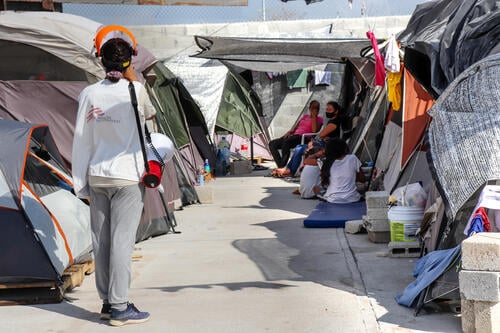
After eight years of uninterrupted care in the cities of Reynosa and Matamoros, in northeastern Mexico, Médecins Sans Frontières (MSF) ended our project for migrants in these cities on 30 September.
Our northeast border project was created in 2017 in response to the severe physical and mental health needs and poor living conditions of migrants who became stranded in northern Mexico in their search for a better life. This was driven by factors such as restrictive and discriminatory migration policies in the United States and Mexico, widespread violence in the country, and the limited capacity of local authorities to respond to mass influxes of people in cities like Reynosa and Matamoros.
“Over these years we have cared for thousands of people exposed to extreme risks such as kidnapping, torture, sexual violence and dispossession, and we have accompanied their resilience in a deeply hostile environment,” says Cristina Romero, MSF medical activities coordinator in Reynosa. “At the same time, we strengthened the local response by working hand in hand with Mexican health institutions, shelters, and community organisations that have been a fundamental pillar in providing protection and care to these people.”
Eight years of work
Throughout its operation, the project followed a comprehensive care model, combining medical services, mental health care, sexual and reproductive health care, social work, and intercultural mediation. This model allowed for a flexible response to changing needs in a context marked by violence, overcrowding, and a lack of protection.
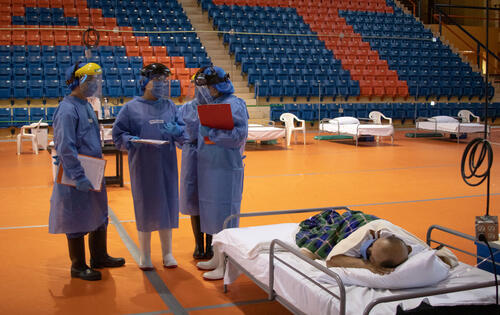
During the COVID-19 pandemic, MSF adapted our activities to also respond to the needs of local communities. General medicine clinics were set up and support was provided in care centres in Reynosa and Matamoros, where both migrants and locals were able to access consultations, psychosocial support, and preventive measures during a critical moment for the health system.
During eight years of humanitarian action, our teams in Reynosa and Matamoros reached people with:
- 67,000 outpatient consultations
- 13,000 individual psychological consultations and 3,700 group sessions
- 394 survivors of sexual violence treated
- 3,700 family planning consultations
- 127,000 participants in health promotion activities
In addition to direct assistance, MSF carried out public and political advocacy work, documenting and denouncing the conditions of violence, abuse and neglect at the border, particularly the impact of measures such as “Remain in Mexico” (MPP), Title 42, and the use and suspension of the CBP One application, among others, which exposed thousands of people to greater risks.
A legacy that continues
Although the closure marks the end of a cycle, MSF stresses that we are not ending our work in Mexico. We will continue to respond to medical and humanitarian emergencies in other parts of the country, based on the learnings and methodologies developed at the border.
The project’s legacy lies not only in the thousands of people assisted, but also in the collaboration with local partners...Carolina López, MSF project coordinator in Reynosa and Matamoros
“The project’s legacy lies not only in the thousands of people assisted, but also in the collaboration with local partners and in strengthening care models that can now be replicated in other contexts of mobility and violence,” says Carolina López, MSF project coordinator in Reynosa and Matamoros.
MSF is deeply grateful to the patients, communities, local health authorities, shelters, journalists, and organisations with whom we worked jointly to guarantee access to health and dignity for people regardless of their origin, legal status, or life experience.
Central American migration
Dehumanising migration policies leave people abandoned in the Americas
Press Release
12 Aug 2025
Central American migration
Unwelcome: Devastating impacts of new migration policies in the Americas
Report
12 Aug 2025
Lebanon
Lebanon: Humanitarian scale-up urgently needed after almost two months of devastation
Statement
17 Apr 2026