


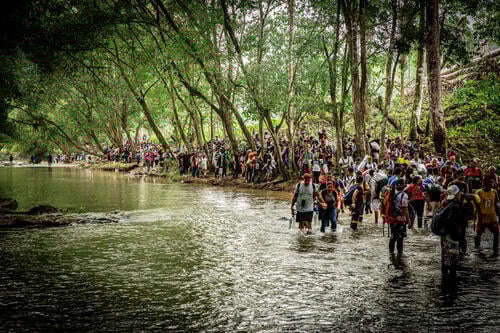
After almost four years in Panama, Médecins Sans Frontières (MSF) has ended our medical and humanitarian activities in the country, which focused mainly on providing care to migrants in transit to North America. The closure is due to a significant decrease in migration flows resulting from changes in regional policies.
“We arrived in Panama in 2021 after migrant patients in Mexico told us about the extreme difficulties they were experiencing in the Darién jungle, and between 2022 and 2024 we treated the highest number of migrants in the country's recent history,” says Altair Saavedra, MSF’s medical coordinator in Panama. “Given the decrease in transit, we have decided to conclude our intervention, but we continue to monitor migration in the region to provide support if critical needs arise.”
From April 2021 to August 2025, MSF teams conducted 163,000 medical consultations and 8,100 mental health consultations. Among these, MSF treated 1,955 victims and survivors of sexual violence.
The decrease in migration flows
The number of people crossing the Darién Gap – the jungle border between Colombia and Panama – on their way to the United States began to decline significantly in July 2024 due to increased border security and political uncertainty in Venezuela. This trend has intensified since a new administration assumed power in the United States on 20 January 2025, with new measures, including the suspension of key asylum and refugee programs, among others, being implemented.
Between 2021 and 2024, 1.2 million people from various nationalities crossed the Darién Gap. However, between January and August 2025, only 2,941 migrants did so according to Panama's National Migration Service.
Between 2022 and 2024 we treated the highest number of migrants in the country's recent history.Altair Saavedra, MSF’s medical coordinator in Panama
Over the past four years, MSF teams have adapted their location and response to changes in routes and decisions made by the authorities regarding the migration crisis. MSF alternated its presence between the two indigenous host communities, Bajo Chiquito and Canaán Membrillo, and the two Temporary Migration Reception Stations established by the Panamanian government.
“Over the past four years, we have assisted hundreds of thousands of people who have arrived visibly exhausted after crossing the jungle,” says Saaverda. “In addition to the risks posed by the terrain, they have also suffered violence at the hands of armed individuals, including robberies, kidnappings, and sexual violence.”
Between March and October 2024, we had to stop our work in Darién because the agreement with the Panamanian Ministry of Health was not renewed. From 2 October, MSF worked in the country on ‘giras médicas’ – three-month medical permits – to provide assistance to migrants in transit and to local communities.
Humanitarian response to the reverse flow
Between February and May, MSF worked at the Temporary Migration Reception Station in San Vicente, where dozens of people from different countries, mostly deported from the United States, were concentrated. Our primary focus was on providing psychological care. In June 2025, following the closure of the route through the Darién Gap, MSF launched a three-month emergency response in the province of Colón to assist migrants in reverse flow from North America, mainly Venezuelans, who were heading to South America by sea.
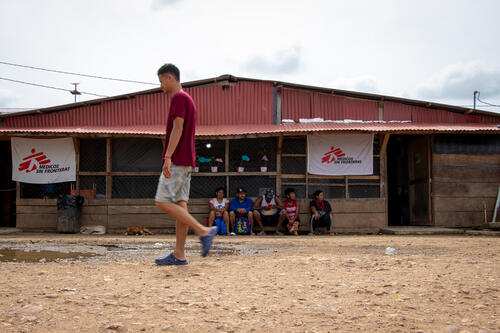
“In the communities of Miramar and Palenque, we found that the water was heavily contaminated, so migrants went up to three days without hydration,” says Derly Sánchez, psychologist and coordinator of activities in Colón. “They spent the night outdoors in the doorways of houses in the communities and had great difficulty obtaining the money to continue their journey.”
MSF teams set up mobile clinics and installed a drinking water tank at the Palenque health centre.
In this region, the most common issue addressed was mental health symptoms caused by feelings of uncertainty about the future and violent events that migrants had experienced at different points along their journey.
“It is very sad to see that some people have got used to being kidnapped and even seeing murders,” says Sánchez. “Sometimes their basic needs were so urgent that they would say, ‘I was kidnapped and tortured, but now I don't have time to talk about it because I need to find somewhere to sleep’.”
We ended all our activities in Panama during the first week of September 2025.
“We recognise the coordinated effort with the authorities and other humanitarian organisations, which was essential to ensure access to quality health services during this period of humanitarian crisis,” says Altair Saavedra, MSF medical coordinator.
For more information on changes in the migration context in Mexico and Central America, read our report Unwelcome: Devastating impacts of new migration policies in the Americas published in August 2025.
Lebanon
Lebanon: Humanitarian scale-up urgently needed after almost two months of devastation
Statement
17 Apr 2026
Gaza-Israel war
Addressing frequently asked questions and allegations about MSF’s work in Gaza
Project Update
17 Apr 2026