Emergency response to IDPs in Gao, Mali
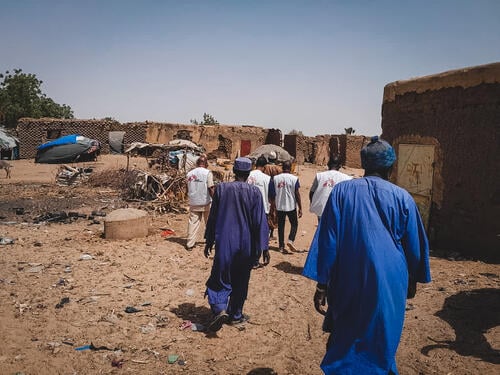
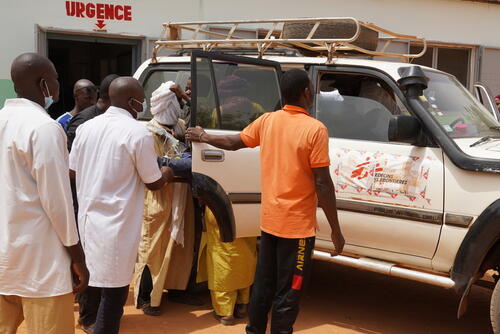
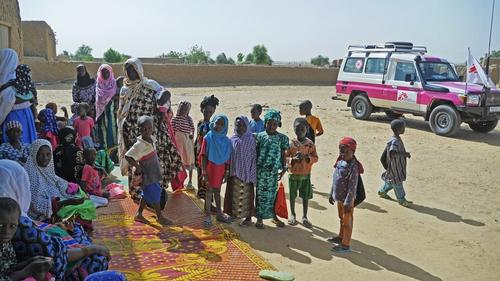
More than 1,700 internally displaced people from Talataye arrived at the Soso Koira site in Gao and settled in unstable conditions. Mali, September 2022.
© Lamine Keita/MSF

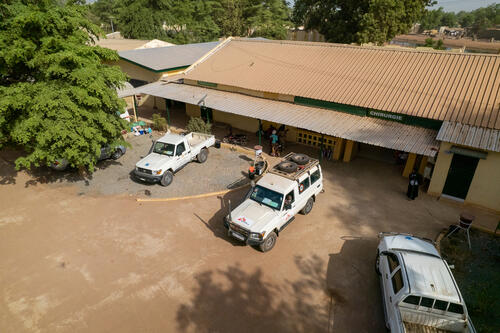
We respond to the needs of displaced people and assist refugees from Burkina Faso in Koro and Douentza. We also treat the war-wounded in Ansongo and Gao and provide various medical services, including maternal and paediatric care, screening and treatment for malnutrition, mental healthcare, and emergency surgery across all our projects in the country.

Our activities in 2024 in Mali

Data and information from the International Activity Report 2024.

MSF in Mali in 2024 Médecins Sans Frontières (MSF) assisted thousands of people affected by conflict and flooding in Mali in 2024. We also delivered essential health services, particularly for women and children.
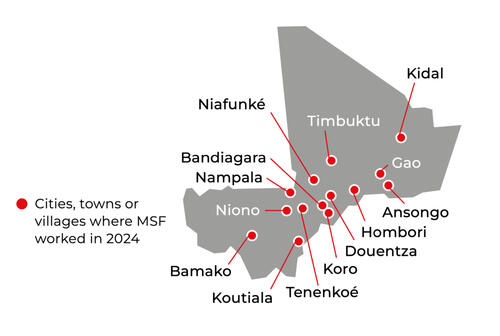
Mali IAR map 2024
Country map for the IAR 2024.
© MSF

Throughout the year, violent clashes between the Malian army and non-state armed groups, and brutal attacks on civilians, forced many families to leave their villages. Our teams working around Niafunké, Kidal, Ténenkou, Nampala, and Koro reported that most came to live in precarious conditions, with little access to healthcare or other basic services.  

We continued to run our regular activities, supporting health facilities across the country with donations of supplies and medicines, as well as contributing to paediatric and maternal care, sexual and reproductive health services, and emergency surgery for victims of violence. As a result of the upsurge in fighting, we treated a significant number of patients for violence-related injuries in 2024.

In October, heavy rains caused flooding in several regions of the country, including the capital, Bamako. As well as causing widespread destruction and displacing thousands of people, the floods encouraged the proliferation of mosquitoes, which contributed to a significant increase in malaria cases. MSF collaborated with the Malian authorities to respond to the immense humanitarian needs of people displaced by the floods and conflict by providing medical care and essential household items, supplying clean water, and building latrines.

Other support included training healthcare staff and rehabilitating health facilities, in the Niono, Niafunke, Ténenkou and Douentza health districts. We also maintained our community-based health services for people living in remote areas who struggle to obtain medical care.

Despite robberies, violence, physical attacks, and restrictions on access, our teams made every effort to maintain activities across the country, especially since reduced international funding and the withdrawal of several aid organisations have further limited people's access to essential services and support.  

In Bamako, we handed over screening activities at our oncology project to the Ministry of Health and its partners, and refocused our support on improving access to care for breast and cervical cancers.


In 2024

find us online

Up Next
19 November 2020