In the Central African Republic (CAR), living with diabetes is a real challenge. Access to treatment is limited, medicines such as insulin are expensive and often difficult to find, and structured patient care programmes are rare.
In Carnot, in the southwest of the country, Médecins Sans Frontières (MSF), in collaboration with the Ministry of Health and Population, provides free medical care to many people living with diabetes. Since the launch of the programme in 2019, we have supported 245 diabetic patients with the Ministry of Health and Population.
Learning to live with diabetes
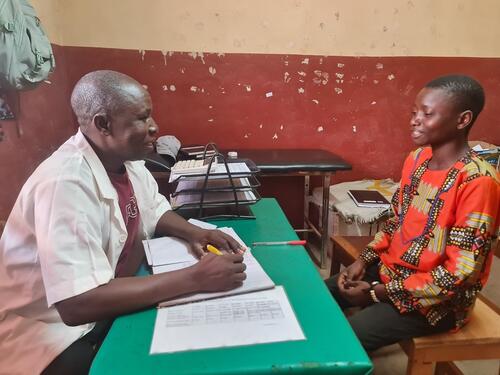
Adolphe Andoa comes from Nola, more than 200 kilometres from Carnot. Diagnosed with type 1 diabetes five years ago, he struggled to obtain insulin in his town.
“I was constantly tired, drank a lot of water and was always hungry,” he recalls. “I had to stop school in Year 8 because of my illness.”
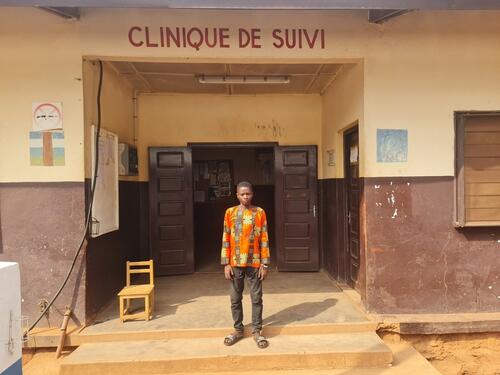
With MSF’s support at the follow-up clinic of Carnot District hospital, Andoa now receives free treatment and has been trained to monitor his blood sugar and inject himself with insulin at home.
“Today I feel much better,” says Andoa. “I went back to school in 2024 and I live a normal life. My dream is to become a doctor to help other children with diabetes.”
Adolphe Andoa, a patient with type 1 diabetes from Nola
“Today I feel much better. I went back to school in 2024 and I live a normal life.”
Type 1 diabetes is a chronic disease in which the pancreas no longer produces insulin, a vital hormone that regulates blood sugar levels. Without insulin, glucose builds up in the blood instead of being used as an energy source, which can lead to severe complications and even become life-threatening. Treatment therefore relies on daily insulin injections and regular blood glucose monitoring.
In a context like that of the CAR, where insulin remains very costly and health facilities are limited, this disease poses a real challenge for patients and their families. Moreover, treatment must be taken for life, representing a financial burden that many struggle to bear.
Improvements for patients and families
For adults like Calvin Bedagba, learning to manage diabetes has been a major transformation. Diagnosed in 2021, he was initially very anxious.
“My parents thought diabetes was a death sentence,” he recalls.
Through MSF’s awareness sessions, Calvin learned what diabetes really is and how to live with it. Today, he checks his blood sugar, injects insulin himself at home, and attends the clinic each month for follow-up care.
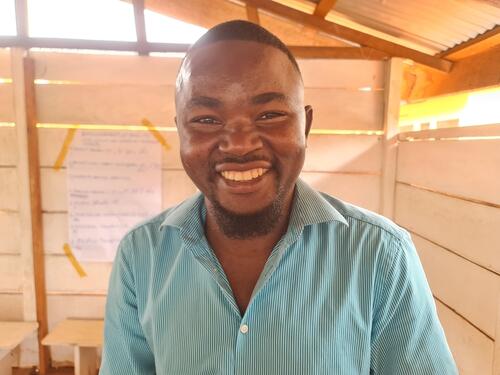
Calvin Bedagba, a patient with type 1 diabetes
“My parents thought diabetes was a death sentence.”
Parents also feel the impact of the programme. Emmanuel Warassio is the father of Carole, who has type 1 diabetes. For years, he had to take her to the clinic, morning and evening, for her injections. Today, Carole is part of the patient empowerment programme, which allows her to manage her treatment at home.
“MSF is currently the only provider of insulin in Carnot,” says Warassio. “We hope that, in the future, other partners will help strengthen this support so that all children can have sustainable access to the care they need.”
A programme that changes lives
Newly enrolled patients receive a full medical kit including a glucometer, insulin, syringes, lancets and clay pots to store insulin. They are trained to monitor their blood sugar and inject themselves. Monthly follow-ups and home visits ensure that patients maintain their autonomy while continuing to receive professional support.
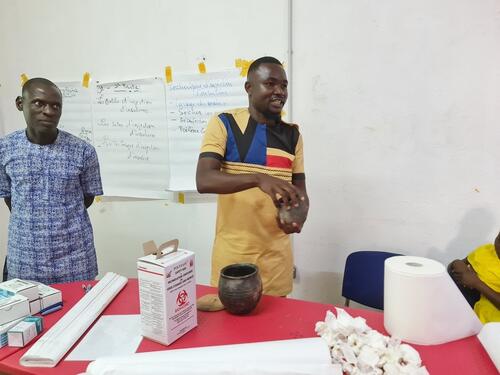
Étive Marvin Houboutouni, MSF’s diabetes programme manager, explains: “This programme allows patients to stabilise their health and return to school, work, and family life.”
“Today, 245 patients are receiving care, including 63 children and 182 adults,” says Houboutouni. “Among them, 80 have been trained to manage their treatment independently, including 11 children.”
Looking ahead
Despite challenges, such as the long distances to reach the clinic and the difficulty of obtaining affordable treatment outside of MSF, these stories reflect the hope and resilience of diabetic patients in Carnot. Through education and free access to treatment, MSF is not only improving patients’ lives today but also preparing them to manage their diabetes sustainably in the future.
Still, many challenges remain nationwide to ensure that more people can benefit from this kind of support and gain lasting access to the care they need.
Central African Republic
Two MSF staff members released in Central African Republic
Statement
14 Mar 2026
Central African Republic
Two MSF staff members detained in Central African Republic
Statement
10 Mar 2026