MSF addresses immediate needs for clean water and sanitation in conflict affected areas of Tigray

Ethiopia

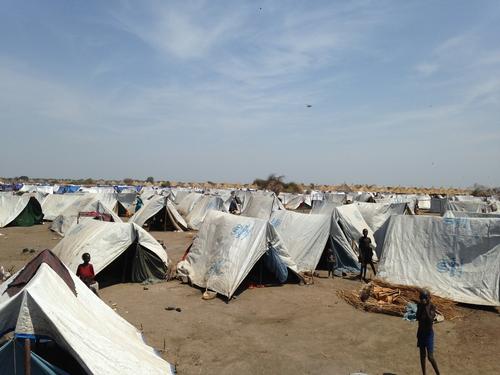
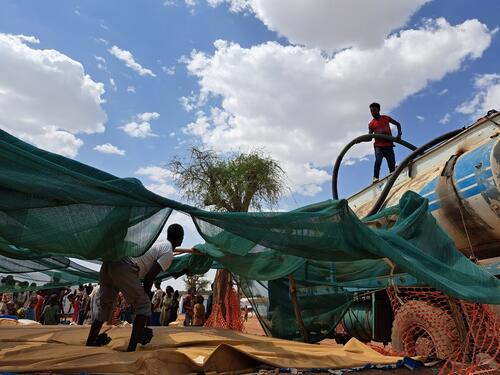
MSF provides clean water to Aby Aday camp in Sheraro, Tigray. The MSF team trucks up to 1.4 million litres of water to serve six camps every day. Ethiopia, May 2023.
© Gabriella Bianchi/MSF

We work in 10 regions of Ethiopia to deliver healthcare to people through administrative barriers and ongoing insecurity.

Our activities in 2024 in Ethiopia

Data and information from the International Activity Report 2024.

MSF in Ethiopia in 2024 Médecins Sans Frontières (MSF) delivered vital assistance to people affected by conflict, drought, floods and disease outbreaks in seven regions of Ethiopia in 2024.
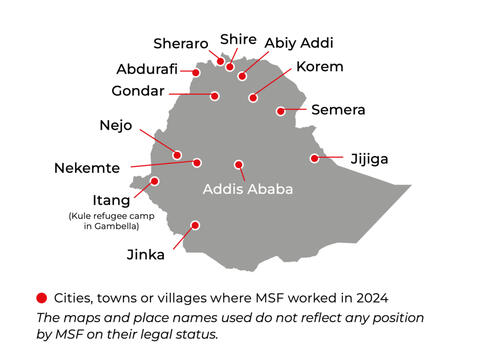
Ethiopia IAR map 2024
Country map for the IAR 2024.
© MSF

Insecurity and administrative challenges continued to hamper humanitarian access to over 21 million people in need of assistance across the country in 2024.[1]

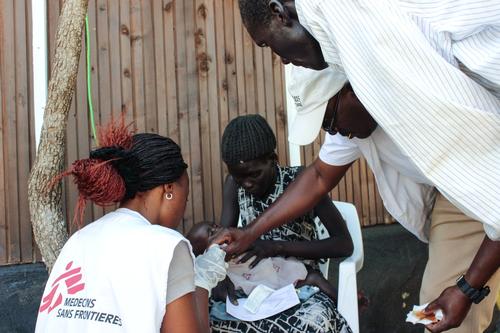
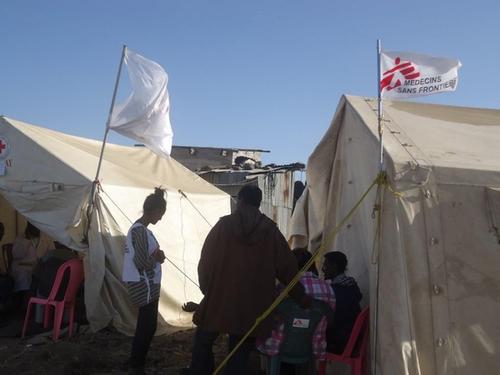
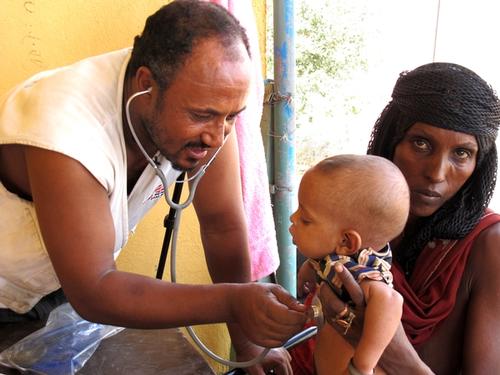
In Gambella, we provided essential care at a health centre in Kule refugee camp. This included specialist treatment for malaria, malnutrition, and sexual and gender-based violence (SGBV), and vaccinations, including for malaria.

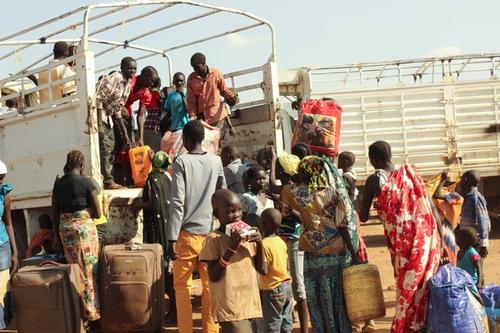
In Somali region, MSF’s emergency team responded to malnutrition, disease outbreaks, and mass displacement.

In Afar, we ran water and sanitation activities and an inpatient therapeutic feeding unit. We also supported the regional hospital’s paediatric department and a cholera response.

In the South Ethiopia and Southwest Ethiopia Peoples’ regions, we used mobile clinics to deliver care for malaria and measles, as well as kala azar (visceral leishmaniasis).  

In Amhara, our teams provided emergency healthcare for people affected by the ongoing conflict, and continued to focus on preventing and treating neglected tropical diseases, such as kala azar and snakebites.  

In Tigray, we ran a range of services, including maternal and child healthcare, a nutrition programme, and treatment for SGBV. In addition, our mobile teams worked in hard-to-reach areas and repaired over 600 water pumps. We also rehabilitated several departments in Abiy Adi General hospital.  

In Oromia, we responded to a surge in malaria cases at two hospitals, and ran mobile clinics, conducting health promotion and water and sanitation activities, and distributing mosquito nets.  

In Korem, we ran mobile clinics and supported the general hospital’s maternal and child health and emergency departments.  

MSF continues to call for accountability for the deaths of our colleagues  
On 24 June 2021, our colleagues María Hernández Matas, Tedros Gebremariam Gebremichael, and Yohannes Halefom Reda were intentionally killed while clearly identified as humanitarian workers, in Tigray. We continue to pursue accountability for their deaths, with the hope that this will improve the safety of humanitarian workers in Ethiopia. 


[1] OCHA: Ethiopia | OCHA


in 2024

Brutal killing of our colleagues in Tigray, in June 2021

msf.org

On 24 June 2021, our colleagues María Hernández Matas, Yohannes Halefom Reda and Tedros Gebremariam Gebremichael were killed while providing life-saving assistance to people in the Tigray region of Ethiopia. No one has claimed responsibility for their killing.

MSF engaged with the Ethiopian authorities for four years, requesting a formal and transparent investigation into their killing. In the absence of such an investigation, we have released our own internal review on what happened to our colleagues that day. This review found that their killing was a targeted, and intentional, attack on clearly identified aid workers. We will continue to honour the memory of María, Yohannes and Tedros, and pursue accountability for their killings.

Read our internal review
Left to right: Yohannes Halefom Reda, a coordination assistant, was 31 years old, from Ethiopia; María Hernández Matas, 35, from Spain, began working with MSF in 2015; Tedros Gebremariam Gebremichael, 31, also from Ethiopia, had been a driver for MSF since May 2021.